
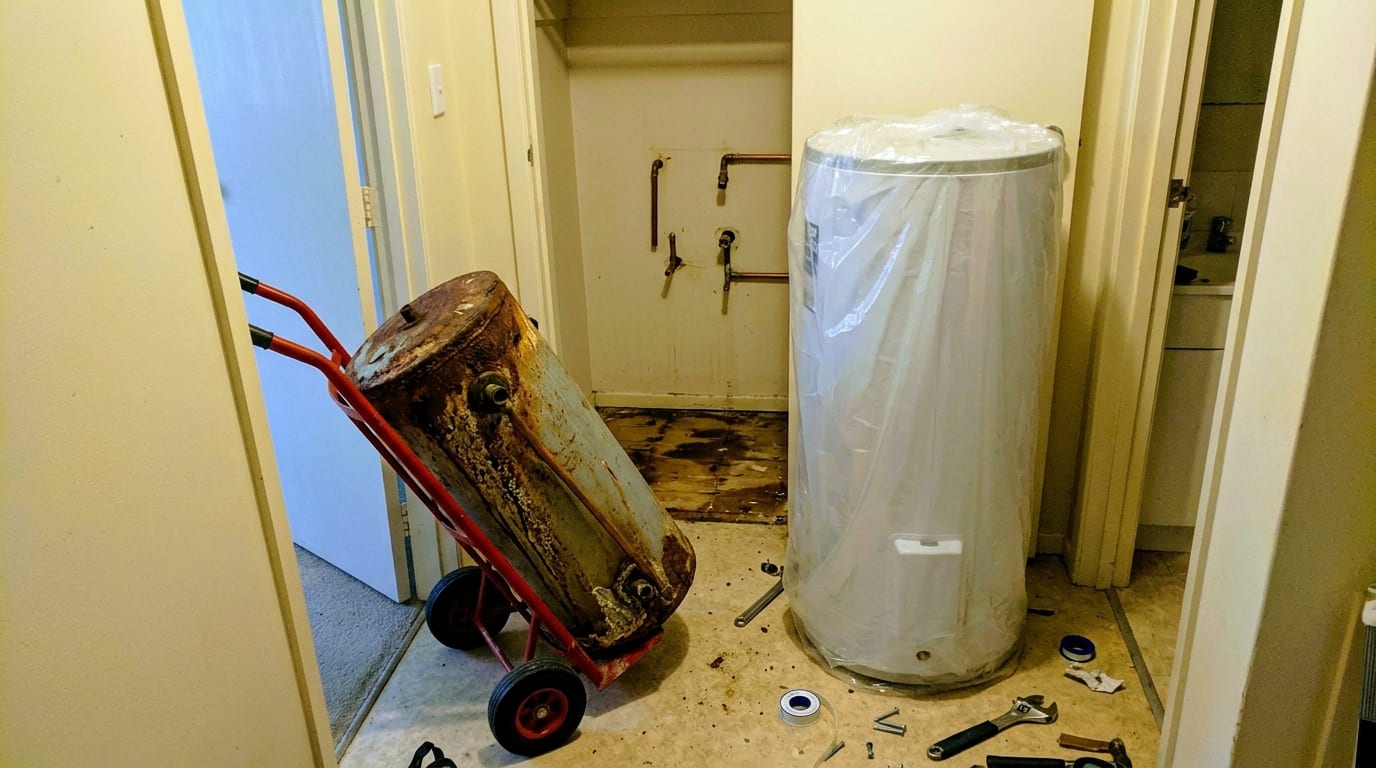
If you run out of hot water most evenings, the cylinder is probably not faulty. It is just too small for how your household actually lives now.
The short answer
As a rough working guide for a mains pressure electric cylinder, allow somewhere around 50 litres per person in the house. A couple is usually comfortable on a smaller cylinder. A family of four or five with two bathrooms needs considerably more, and if everyone showers inside the same hour you need more again.
That is a starting point, not a rule. Three things move it.
1. How many bathrooms
Two bathrooms running at once draws roughly double the flow of one. A house with a second bathroom added later is one of the most common reasons a cylinder that was fine for fifteen years suddenly is not.
2. When people actually use it
Six people spread across the morning is a very different load to four people all showering between seven and eight. Cylinders recover at a fixed rate, so a tight window matters more than the headcount.
3. Recovery time
Once a cylinder is drained it takes hours to reheat, and that is where people get caught. A slightly larger cylinder often solves the problem better than anything clever, because it simply carries more buffer through the busy hour.
Bigger is not automatically better
An oversized cylinder costs more to buy and keeps a larger volume of water hot around the clock, which you pay for whether you use it or not. It also needs the floor and the space to take it. The aim is the smallest cylinder that comfortably covers your busiest hour.
Before you replace anything
Check that it really is a capacity problem. If the water was fine and has recently got worse, that points at a failed element or thermostat instead, which is a repair rather than a replacement. A cylinder that has genuinely always struggled is the one that is undersized.
If you are not sure which you have, we will work it out before anyone talks about buying a cylinder.